Operating system upgradeOperating System Upgrade
Migrating 200 servers from Windows 2008 and Windows 2012 to Windows 2016
The Challenge
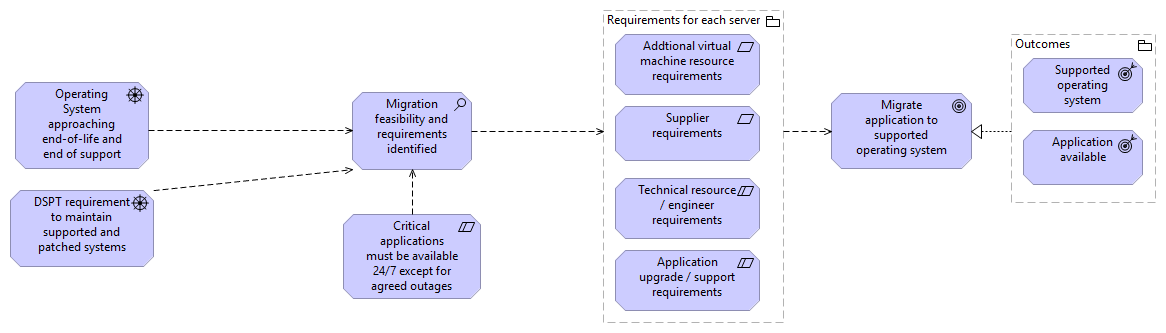
The operating system used by more than 200 servers was due to go out of support within a year. The servers needed to be migrated to a supported operating system so that they would continue to receive security patches and vendor support, and to meet NHS Data Security and Protection Toolkit (DSPT) requirements. The estate included a mixture of physical and virtual servers, supporting everything from small departmental applications to critical systems in use 24 hours a day.
The Issue
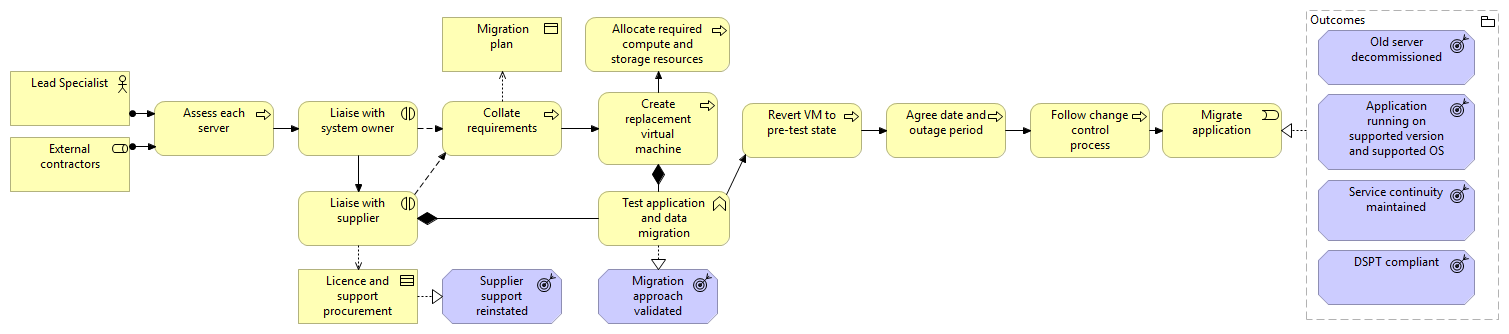
There was no single migration approach that would work for every application. Some applications were themselves out of support and, in some cases, supplier support contracts had lapsed and needed to be reinstated before the supplier would assist with the migration. Critical applications needed outages to be tested and planned carefully, with application owners and suppliers agreeing the date and time for the final migration and a clear route back if it failed. There were also insufficient internal resources to carry out more than 200 migrations alongside normal operational work, so external contractors were brought in to provide additional capacity. Where possible, the work was also used to consolidate smaller applications rather than simply replace every existing server.
The Solution
For most applications, the preferred approach was to build a new virtual server with the new operating system and have the supplier install the application. A copy of the application data was then migrated to the new server so that the process could be tested and the likely outage time established before the live migration. Where required, the application and its data were also upgraded to a current supported version. The new server could then be reverted to its pre-test state ready for the live migration, with the application owner, supplier and technical teams agreeing a suitable cutover window. This allowed the migrations to be planned and tested individually, reduced the risk to critical services and provided the opportunity to bring applications back into support and consolidate the server estate.